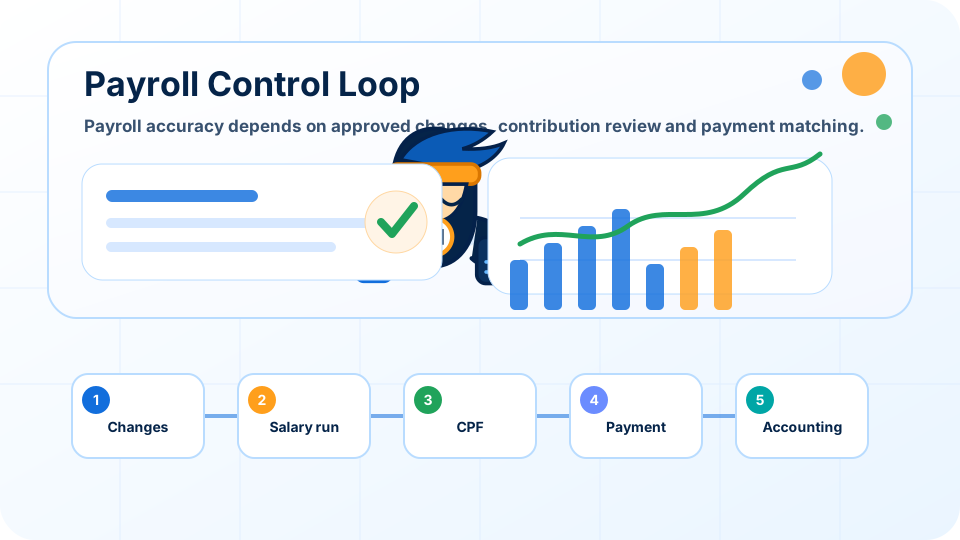

Singapore payroll is a controlled monthly process that connects approved employee data, salary calculations, CPF review, reimbursements, payment evidence and year-end reporting.
Key takeaways
- Use an approved employee-change log rather than rebuilding payroll from messages each month.
- Review CPF treatment, salary components and reimbursements against current official rules and employment facts.
- Separate payroll preparation, approval and payment where the team size permits.
- Build IR8A classifications throughout the year instead of reconstructing employee earnings after year-end.
What a Singapore payroll control system includes
A payroll control system combines employee master data, approved monthly changes, salary and deduction calculations, CPF review, reimbursement evidence, payment approval, ledger reconciliation and year-end reporting. Each stage should identify who prepares, reviews and authorizes the result.
The objective is not simply to produce payslips. Payroll must agree with employment terms, bank payments, CPF submissions, accounting records and IR8A-related data while protecting confidential personal and compensation information.
Payroll begins with clean employee master data
A payroll process is only as reliable as the employee records behind it. The company should maintain start dates, employment terms, salary components, allowances, reimbursements, leave arrangements, identification details, bank details, CPF status where relevant, and any changes approved during the month. When this information is scattered across offer letters, messages and spreadsheets, payroll becomes vulnerable to errors.
The monthly workflow should include a controlled change log. New hires, resignations, salary changes, unpaid leave, bonuses, commissions, allowances and reimbursements should be submitted before a cutoff date. The accountant or payroll preparer then reviews the payroll run against that change log. This reduces the risk of paying an outdated salary, missing a reimbursement, or making an unsupported adjustment.
CPF review should be part of the salary run, not an afterthought
CPF obligations depend on employee profile, wage type and current contribution rules. Because rates and administrative details can change, the company should verify current CPF guidance when setting up or reviewing payroll. Operationally, the accounting workflow should separate ordinary wages, additional wages, reimbursements and non-wage payments so contribution treatment can be reviewed correctly.
A practical payroll dashboard shows gross pay, employee deductions, employer contributions, reimbursements, net pay, payment status and filing status. The accountant should compare the payroll summary with the bank payment file and accounting entries. This ensures the payroll expense, CPF payable and cash movement agree. It also prevents payroll from being treated as a black box outside the accounting file.
Reimbursements need evidence and policy discipline
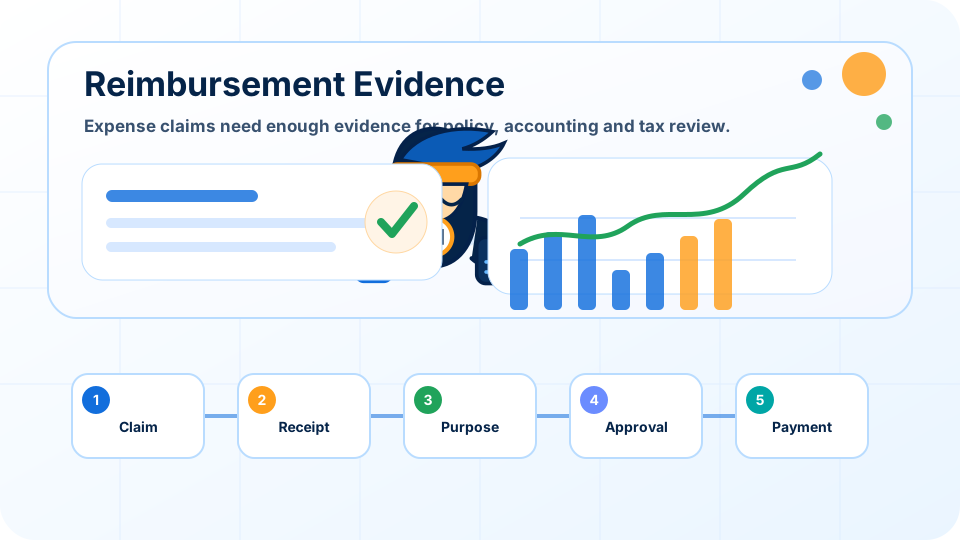
Startups often treat reimbursements casually because the team is small. That habit becomes risky as headcount grows. Each reimbursement should show the employee, date, supplier, business purpose, receipt, approval and whether the amount is reimbursable under company policy. Personal spending, client entertainment, travel, software subscriptions and home-office costs can have different accounting and tax considerations.
The goal is not to slow employees down. The goal is to make approvals clear and to avoid payroll surprises. If reimbursements are submitted late or without receipts, they should appear in an exception queue. The founder can then decide whether to enforce the cutoff or approve a late adjustment. The accountant should not be left to infer policy from incomplete screenshots.
IR8A readiness is built throughout the year
Year-end employee reporting becomes much easier when monthly payroll data is structured. Salary, bonus, benefits, allowances, director fees and other reportable items should be classified consistently throughout the year. If payroll records are rebuilt only when annual reporting is due, the company may need to re-check old approvals, reimbursements and benefits under time pressure.
A founder should receive periodic payroll summaries that show total employee cost, headcount, employer contributions, reimbursements and unusual changes. This supports cash planning and helps management understand the true cost of hiring. Payroll is not only compliance. It is one of the largest operating levers in many startups.
Payroll evidence, approvals and control metrics
Each monthly payroll pack should contain the approved change log, employee master-data changes, draft-to-final variance report, CPF review, reimbursement evidence, payment approval, bank confirmation and ledger reconciliation. Sensitive files should be stored in a restricted location rather than attached across open email or chat threads.
A reviewer should compare headcount, gross pay, employer costs, bonuses, deductions and net pay with the prior month and the approved change list. Unexpected changes require an explanation before the payment file is released. Bank-detail changes deserve separate verification because they combine privacy and fraud risk.
Useful control metrics include payroll changes submitted after cutoff, manual adjustments, payments rejected by the bank, unresolved CPF exceptions, missing reimbursement evidence and differences between payroll, bank and ledger totals. Year-end readiness can be measured by whether employee earning categories reconcile to the records needed for IR8A reporting without a separate reconstruction exercise.
| Stage | Primary evidence | Approval |
|---|---|---|
| Employee change | Contract, letter or approved form | Authorized manager |
| Payroll calculation | Change log and prior-month variance | Payroll reviewer |
| Payment and posting | Bank file, payment confirmation and ledger | Payment approver and accountant |
Payroll risks that require specialist review
Incorrect worker or payment treatment
Employees, directors and contractors can have different contractual, tax and contribution implications. Do not classify a person from payment patterns alone.
Unauthorized master-data changes
Bank-detail or salary changes should require source evidence and independent approval to reduce fraud and accidental overpayment risk.
Confidentiality failures
Limit payroll access, exports and chat-based sharing. Approved systems should have role-based permissions, retention rules and a record of changes.
Monthly payroll implementation workflow
1. Control employee changes
Use a cutoff and approved log for joiners, leavers, salary changes, bonuses, commissions, leave, allowances and bank-detail changes.
2. Prepare and review
Compare the draft payroll with contracts, prior month, CPF logic and reimbursement evidence. Escalate unusual or manual adjustments before payment.
3. Pay, reconcile and archive
Approve the payment file, reconcile payroll to the bank and general ledger, then retain the signed summary and source evidence with restricted access.
Monthly payroll, CPF and IR8A checklist
- Maintain employee master data, employment terms and approved salary changes in one controlled location.
- Set a monthly payroll change cutoff for hires, resignations, bonuses, leave and reimbursement claims.
- Review current CPF guidance before configuring contribution treatment or unusual wage components.
- Match the payroll summary to bank payments, CPF payable and accounting entries.
- Require receipt, business purpose and approval for reimbursements before payment.
- Protect payroll access because salary, identity and bank data are confidential.
- Track employee cost by department, role or project if management needs that visibility.
- Prepare IR8A-related classifications throughout the year instead of rebuilding them at year-end.
How Ninja Accountant reviews this area
Ninja Accountant should review payroll as a controlled monthly cycle. The accountant checks source changes, contribution treatment, payment reconciliation, accounting entries and year-end readiness. The founder receives a clear view of employee cost and open payroll risks.
The human side matters too. Payroll errors damage trust quickly. A repeatable workflow gives employees confidence while giving management reliable cost information.
Additional review considerations
Approval control is especially important in small teams because one person may request, approve and pay costs informally. Separating preparation, approval and payment review reduces the risk of mistakes and creates a better record for future review.
Payroll reporting should distinguish cash timing from expense recognition. A bonus approved for one period, paid in another, and reported for annual purposes may require careful treatment. The workflow should capture that context when the decision is made.
Related Ninja Accountant guides
Frequently Asked Questions
What information should be collected before payroll cutoff?
Collect approved joiner, leaver, salary, leave, bonus, allowance, reimbursement and bank-detail changes with effective dates and supporting documents.
Can payroll software determine CPF automatically?
Software can calculate based on configured data, but employers should verify employee status, age, wage components and current CPF rules. Configuration errors can repeat every month.
How should reimbursements be handled?
Require a receipt, business purpose and approval, then distinguish genuine business reimbursements from allowances or other employee payments requiring different treatment.
When should IR8A preparation begin?
Maintain consistent earning and benefit classifications throughout the year, reconcile them to payroll and review current employer reporting requirements before year-end.