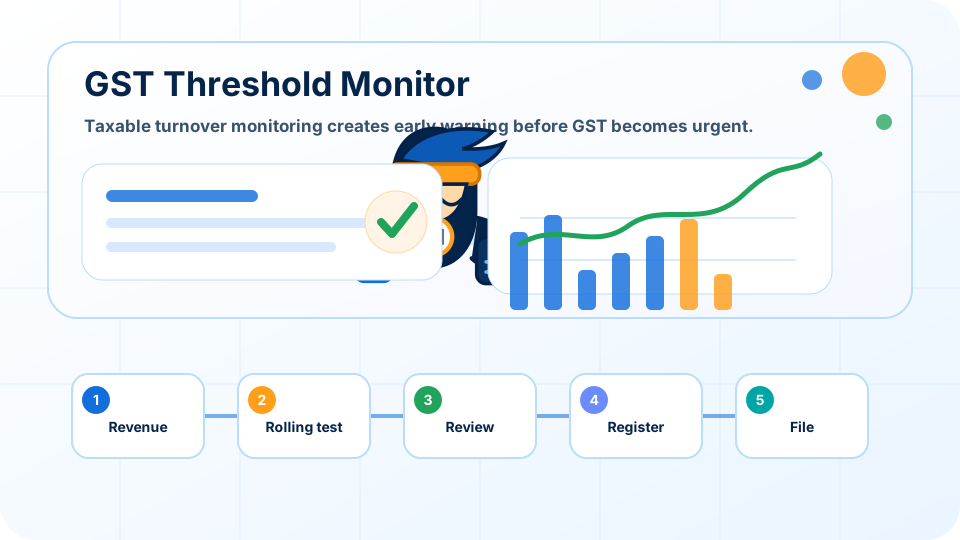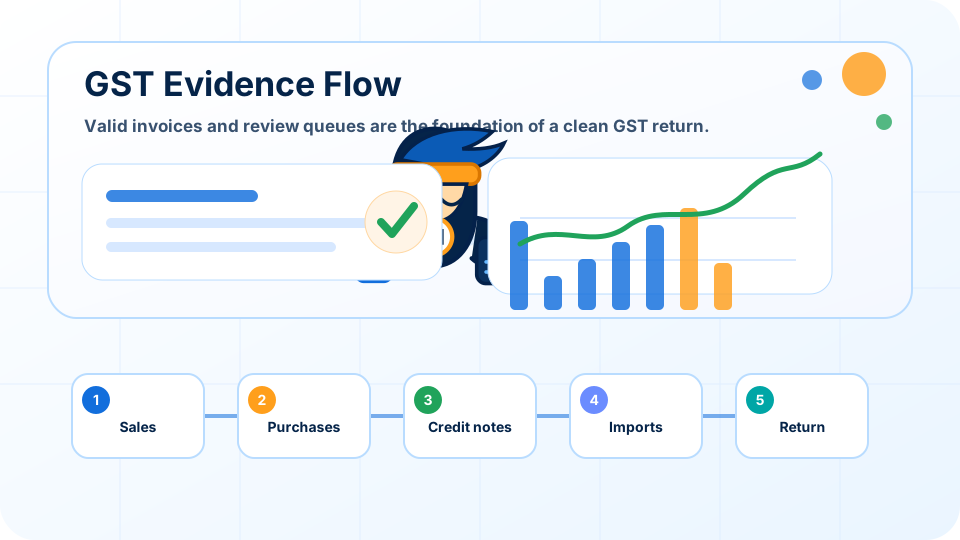


GST registration readiness means monitoring taxable turnover and preparing invoices, systems, evidence and review controls before registration or filing obligations become urgent.
Key takeaways
- Monitor taxable turnover monthly using revenue categories that reflect how the company actually earns income.
- Do not claim input tax from incomplete evidence or assume every business cost receives the same GST treatment.
- Registration affects contracts, pricing, invoices, cash flow, accounting codes and staff procedures—not only the return form.
- Confirm current thresholds, deadlines and exceptions directly with IRAS or a qualified Singapore tax professional.
What GST readiness means in Singapore
GST readiness is the operational work required to identify a registration obligation early and produce reviewable GST records. It connects taxable-turnover monitoring with customer invoices, supplier tax invoices, credit notes, accounting codes, return periods and the cash reserved for tax payments.
A startup should not rely on a single annual revenue figure. It needs a monthly view of revenue streams, including exports, deposits, marketplace collections, related-party activity and any items whose treatment is unclear. The latest registration rules should be checked against the official IRAS GST registration guidance.
GST starts with the right revenue view
A founder often thinks about GST only when a customer asks for a GST invoice or when annual revenue is clearly growing. That is late. The accounting system should monitor taxable turnover by month and distinguish revenue streams that may need different treatment. Subscription income, service fees, project deposits, reimbursed expenses, exports, marketplace income and related-party transactions should not all be collapsed into a single revenue bucket without review.
In Singapore, GST registration obligations depend on taxable turnover tests and expected taxable supplies. The exact position should be checked against current IRAS guidance, especially when the company has overseas customers, exempt supplies or rapidly changing revenue. The accountant's role is to create a dashboard that signals when review is needed, not to wait until the threshold is accidentally crossed.
Invoice evidence determines return quality
GST reporting depends on evidence. Sales invoices must show the right customer, date, value, supply description and tax treatment. Purchase invoices and expense receipts must be complete enough to support input tax claims where applicable. If the document layer is weak, the GST return becomes a risky reconstruction exercise. A company may have paid a supplier, but without a valid invoice and clear business purpose, the tax treatment may require caution.
The practical workflow is to tag documents by GST relevance at intake. Supplier invoices, import documents, credit notes, customer adjustments, refunds and recurring subscriptions should flow into a review queue. The accountant can then confirm coding, check unusual items, and prepare a return from a controlled set of records rather than a scattered folder of late evidence.
Registration changes operations, not just tax reports
Once a company registers for GST, the change affects pricing, contracts, invoice templates, payment collection, supplier review, accounting codes and customer communication. The founder needs to understand whether prices are GST-inclusive or GST-exclusive, how customer invoices will display tax, and how the company will manage cash collected on behalf of the tax authority. A registration decision should therefore involve operations and sales, not only accounting.
Startups should also review systems before registration. Invoice templates, accounting tax rates, product settings, recurring invoices, payment links and reporting dashboards should be configured and tested. The first GST period should not be the first time the team discovers that sales invoices are inconsistent or that expense evidence is incomplete.
The review calendar prevents last-minute filings
GST compliance improves when the company runs a monthly review, even if returns are filed periodically. The monthly review should check taxable turnover, output tax coding, input tax evidence, credit notes, imports, foreign currency items and unusual transactions. The return period then becomes a consolidation of reviewed months rather than a scramble.
A founder dashboard should show three things: current turnover against monitoring thresholds, the evidence status of GST-relevant purchases, and open review questions. That view helps the founder make pricing and cash-flow decisions earlier. It also allows the accountant to spot issues before filing, when corrections are easier and explanations are fresher.
GST evidence and monitoring dashboard
A useful GST dashboard separates registration monitoring from return preparation. The registration view tracks taxable turnover, forecast revenue and unresolved treatment questions. The filing view tracks output tax, potential input tax, missing supplier documents, credit notes, manual journals and reconciliation differences for the current period.
Management should see both the accounting amount and the evidence status. A large input-tax balance with weak documentation should not appear as an ordinary recoverable amount. Likewise, a turnover threshold alert should identify the revenue categories and transactions driving it so the accountant can review the underlying facts.
| Control | Evidence | Decision |
|---|---|---|
| Taxable-turnover monitor | Sales ledger and revenue mapping | Registration review required or continue monitoring |
| Input-tax exception list | Supplier tax invoices and business purpose | Claim, defer or escalate |
| GST control reconciliation | Ledger, return draft and prior filing | Approve or investigate difference |
GST errors that need professional review
Incorrect turnover scope
Using total bank receipts or one undifferentiated sales account can misstate the registration position. Review deposits, pass-through amounts, foreign activity and related-party items separately.
Unsupported input tax
A payment in the ledger is not enough. Supplier identity, tax invoice requirements, business purpose and any restriction on recovery must be reviewed.
Timing and cut-off errors
Late invoices, credit notes and transactions around the registration date can fall into the wrong return period. Maintain a documented cut-off review.
GST readiness implementation plan
1. Build the turnover monitor
Map revenue sources to the legal entity, invoice date, customer location and expected GST treatment. Review the rolling position monthly rather than waiting for year-end.
2. Test documents and systems
Confirm invoice fields, credit-note handling, tax codes, expense evidence, pricing language and e-commerce or payment-platform integrations before registration takes effect.
3. Establish return review
Set a close calendar with responsibility for reconciliation, exception review, management approval and cash reservation before each filing deadline.
GST registration and filing control checklist
- Monitor taxable turnover monthly and keep a rolling view of relevant revenue streams.
- Review whether revenue is local, export, exempt, out-of-scope or otherwise requiring advice.
- Prepare invoice templates and accounting tax rates before registration is effective.
- Tag supplier invoices, credit notes and import documents for input tax review.
- Maintain a GST evidence queue for missing invoices, unclear business purpose and unusual transactions.
- Test the first GST return from reviewed accounting data before the filing deadline.
- Explain pricing, cash-flow and customer communication changes to the commercial team.
- Keep official IRAS guidance linked in the accounting file because rules and administrative details can change.
How Ninja Accountant reviews this area
Ninja Accountant should review GST readiness as a business process. The accountant checks threshold monitoring, transaction coding, evidence quality, invoice setup and return preparation. The founder should leave the review understanding what will change operationally if registration becomes required or voluntarily useful.
The value is early warning. A company that monitors GST monthly has time to update systems, train staff, adjust pricing language and clean evidence. A company that discovers GST late often spends more time correcting avoidable workflow gaps.
Additional review considerations
GST work benefits from exception reporting. Rather than reviewing every ordinary invoice with the same intensity, the system should flag missing tax invoices, unusually large expenses, customer credits, manual journal adjustments and transactions that do not match the expected revenue model.
Cash-flow planning matters because GST collected from customers is not operating margin. A dashboard that separates sales, GST collected, supplier GST and payable amounts helps founders avoid using tax cash for routine spending.
Related Ninja Accountant guides
Frequently Asked Questions
When should a startup begin monitoring GST?
From the start of trading. Early monitoring prevents rushed system changes and gives management time to understand pricing and cash-flow effects before an obligation arises.
Is bank income the same as taxable turnover?
No. Bank receipts can include deposits, loans, capital contributions, transfers and refunds. Turnover should be determined from the underlying supplies and current GST rules.
Can AI decide the GST code for every invoice?
AI can suggest codes and flag missing evidence, but unusual supplies, exports, mixed transactions and restricted expenses require review against current IRAS guidance.
What should be reviewed before a GST return is filed?
Reconcile sales, purchases, tax control accounts, credit notes and major exceptions; confirm evidence and obtain management approval for unresolved or judgemental items.