

Startup management reporting turns reviewed accounting data into a short decision system covering cash, runway, margins, collections, obligations and operating drivers.
Key takeaways
- Start with recurring founder decisions, then select the smallest set of metrics that supports them.
- Show forecast assumptions, data-quality warnings and variance explanations—not only charts.
- Connect financial KPIs to operational drivers such as leads, conversion, utilization or customer retention.
- Every material exception should have an owner, next action and review date.
What management reporting should do
Management reporting is the recurring process of turning accounting and operational data into explanations and decisions for managers. A useful pack normally includes a concise profit view, cash position and forecast, receivables, key obligations, selected KPIs and commentary on material movements.
The report should distinguish recorded facts from forecasts and assumptions. It should also disclose when reconciliation, payroll, invoices or other inputs are incomplete so the founder understands how much confidence to place in each figure.
A dashboard should answer decisions, not display everything
Founders often ask for dashboards because they want visibility, but visibility without decision design becomes noise. A good management report starts with the decisions the founder must make: whether to hire, whether to spend on marketing, whether pricing is working, whether customers are paying on time, whether runway is safe, and whether gross margin is improving. Each metric should connect to an action. If a number changes and no one knows what decision it affects, it may not belong on the main dashboard.
The accountant's role is to translate bookkeeping into a decision structure. Revenue should be separated in ways that match the business model. Direct costs should support margin analysis. Operating expenses should show controllable categories. Receivables should highlight collection risk. Cash reports should distinguish bank balance from available runway after committed payments.
Cash-flow forecasting requires accounting discipline
A cash forecast is not a spreadsheet fantasy. It is a structured view of starting cash, expected customer collections, committed supplier payments, payroll, tax obligations, loan payments, planned investments and scenario assumptions. The forecast becomes stronger when accounting records are current. If receivables are not reviewed, payables are incomplete or payroll changes are missing, the forecast is just a guess.
For a Singapore startup, the forecast should include compliance-related cash needs where relevant, such as tax reserves, GST payable if registered, CPF and payroll obligations, corporate secretary fees, audit or filing costs, and loan commitments. These items are predictable enough to include, and they are painful when forgotten.
KPIs must connect finance to operations
The most useful KPI set combines financial and operational drivers. A SaaS startup may track recurring revenue, churn, acquisition cost, gross margin, support cost and runway. A service company may track project margin, utilization, pipeline, collections and contractor cost. An ecommerce company may track contribution margin, inventory turn, advertising efficiency, payment fees and refund rates. The accounting system does not always hold every driver, but it should connect financial outcomes to the operational data that explains them.
This is why tagging and coding discipline matters. If marketing spend is not separated by channel, customer acquisition analysis becomes weak. If project costs are not tagged, project margin is invisible. If payroll cost is not mapped by function, hiring decisions become emotional rather than analytical. A dashboard is only as good as the data structure underneath it.
The monthly report should include commentary
Numbers alone do not create understanding. A professional monthly report should explain what changed, why it changed, what is expected next, and what action is recommended. The commentary should call out unusual items, missing evidence, one-off costs, delayed invoices, collection risk, margin shifts and cash pressure. The founder should be able to read the report and know which three issues deserve attention.
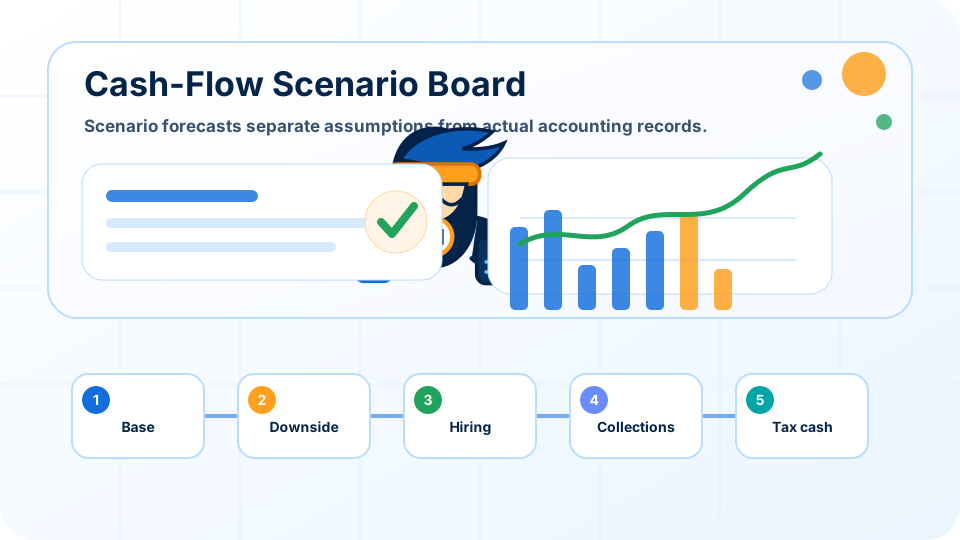
The report should also separate actuals from forecasts. Actuals explain what happened. Forecasts explain what may happen if assumptions hold. Scenarios explain what changes if sales are delayed, hiring accelerates, margins fall or collections slow. This creates a finance conversation that supports decisions instead of simply recording history.
A practical startup KPI framework
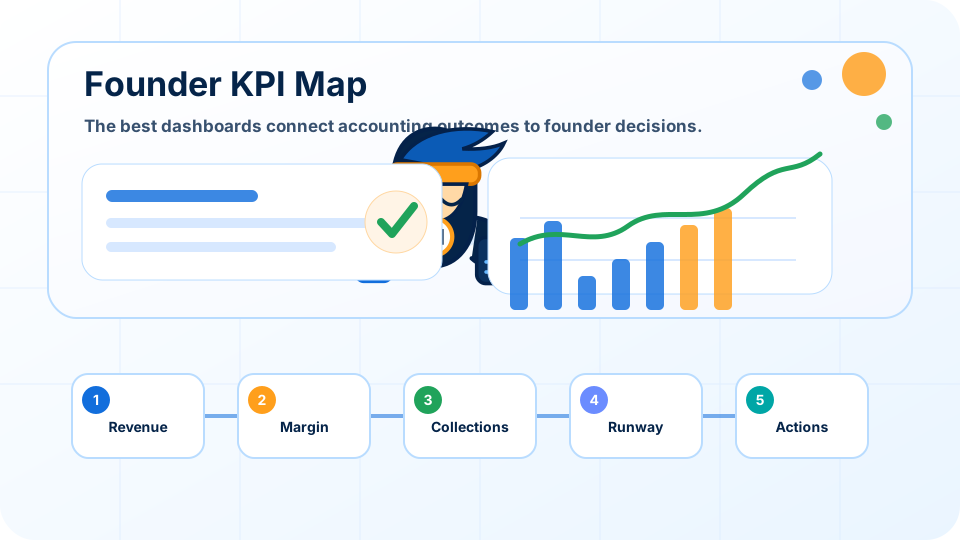
Organize the dashboard in layers. The first layer answers survival and liquidity: bank cash, near-term obligations, runway and collections. The second explains economic quality: revenue mix, gross margin, customer concentration and recurring versus one-off income. The third links the numbers to operations, such as leads, conversion, utilization, churn or project delivery.
Every metric should have a definition, source, owner, frequency and action threshold. If two teams calculate a KPI differently, the reporting pack should resolve the definition before discussing performance. Keep prior-period definitions stable or clearly label restatements so trends remain interpretable.
| Decision area | Example measures | Management question |
|---|---|---|
| Liquidity | Cash, runway and overdue receivables | Which commitments can the company safely make? |
| Economics | Gross margin and customer concentration | Is growth improving or weakening the model? |
| Execution | Conversion, utilization or churn | Which operating driver explains the financial movement? |
Management reporting failure points
Dashboard without reconciled data
A polished chart can still be wrong when bank, revenue, payroll or receivable data is incomplete. Display data-quality status alongside the metrics.
Forecasts without assumptions
Cash projections should identify collection timing, payroll, tax, subscriptions and planned decisions. A single unexplained number is not a forecast.
Vanity metrics
Remove figures that look impressive but do not influence an owner, threshold or decision. A smaller accountable dashboard is more valuable.
How to build a founder reporting pack
1. Define the decisions
List the monthly questions management must answer: hiring, pricing, collections, spending, runway, project margin or fundraising readiness.
2. Build the reporting bridge
Map each question to a metric, source, owner and accounting control. Remove metrics that cannot be explained or acted on.
3. Add commentary and follow-up
Explain the largest changes, record assumptions and assign actions. Review the prior actions at the next reporting meeting.
Monthly management-reporting checklist
- Define the founder decisions the dashboard must support before choosing metrics.
- Keep revenue, direct cost, payroll and operating expense categories aligned with the business model.
- Review receivables aging and collection assumptions before updating cash forecasts.
- Include tax, GST, CPF, loan and filing cash needs in runway planning where relevant.
- Connect accounting tags to operational dimensions such as channel, project, customer or department.
- Report actuals, forecast and scenarios separately so assumptions are clear.
- Add commentary that explains changes, risks and recommended actions.
- Retire metrics that look impressive but do not support a decision.
How Ninja Accountant reviews this area
Ninja Accountant should position management reporting as the bridge between accounting and advisory. The accountant reviews data quality, explains movements, highlights risk and helps the founder prioritize action. This is where the monthly close becomes a leadership tool.
The best report is concise but deep. It does not overwhelm the founder with every possible chart. It focuses attention on cash, margin, collections, obligations and the operational drivers that management can influence.
Additional review considerations
Scenario design should be practical. A founder usually needs a base case, a downside case and a decision case. The downside case shows what happens if revenue slips or collections slow. The decision case shows the impact of hiring, marketing spend or a pricing change.
A dashboard should include data-quality indicators. If bank reconciliation is incomplete, payroll is pending or invoices are missing, the report should say so. Confidence in the numbers is part of the message.
Related Ninja Accountant guides
Frequently Asked Questions
Which KPIs should a startup report?
Choose metrics that explain cash, growth quality, margin, collections and the operational drivers management can influence. The exact set depends on the business model.
How often should management accounts be prepared?
Most active startups benefit from a monthly cadence. Cash and collections may need more frequent monitoring when runway is short or transaction volume is volatile.
What is the difference between a budget and a cash-flow forecast?
A budget expresses an expected operating plan, while a cash-flow forecast estimates when money will enter and leave the bank. They should reconcile conceptually but answer different questions.
Can AI write the monthly commentary?
AI can draft variance explanations from approved data, but an accountant or finance lead should verify the facts, context, causality and recommended actions before circulation.