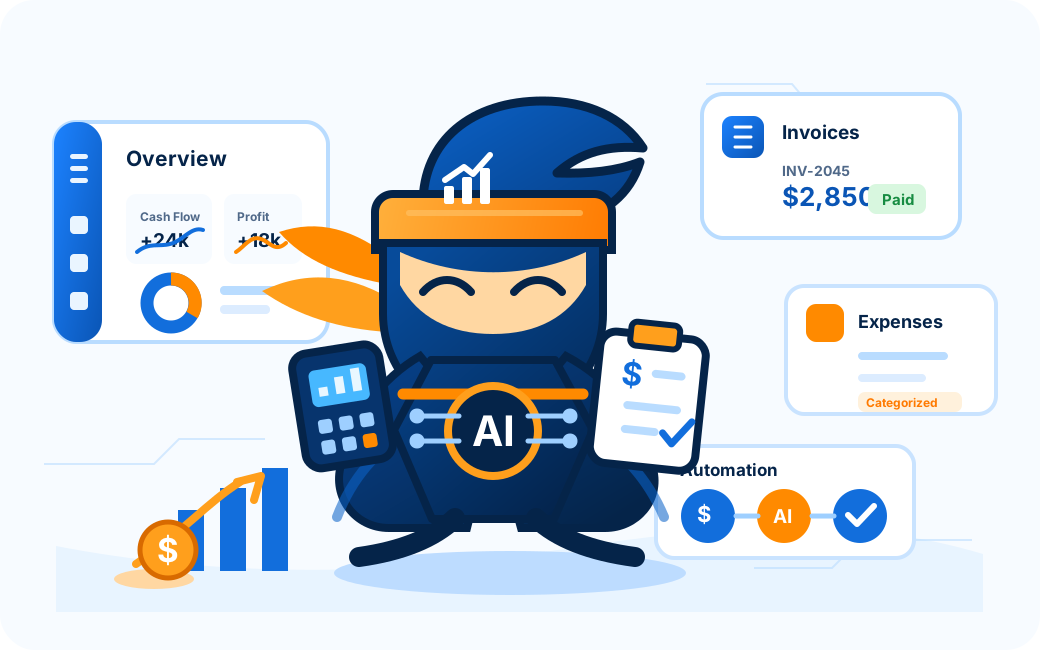
Accounting AI is the use of artificial intelligence to classify, reconcile, analyze and report financial information while keeping professional review and accountability in the workflow.
Key takeaways
- Accounting AI is broader than a chatbot: it includes OCR, machine learning, predictive analytics, generative AI and increasingly AI agents.
- The strongest current use cases organize evidence, suggest matches, detect exceptions and draft analysis rather than making unsupervised legal or accounting judgements.
- Security, data quality, explainability, audit trails and human approval should be designed before sensitive financial data enters a tool.
- Start with one low-risk workflow and measure close time, override rate, exception volume and post-close corrections before scaling.
What is accounting AI?
Accounting AI is software that uses artificial intelligence to assist with recording, classifying, reconciling, analyzing and reporting financial information. It can read documents, identify patterns, generate explanations and route unusual items to a professional. It is not a licensed accountant, a source of current tax law or an independent signatory for financial statements and filings.
Accounting automation is the broader category. Rule-based workflows and robotic process automation follow predefined steps; machine learning predicts from patterns; optical character recognition and intelligent document processing extract data; generative AI drafts or summarizes; and agentic AI attempts multi-step goals. These technologies have different risk and review requirements and should not be presented as interchangeable.
Benefits of AI in accounting
Accounting used to be experienced by many business owners as a delayed administrative service. Documents were sent at the end of the month, bank statements were reconciled after transactions had already happened, questions were answered by email, and management reports arrived when the decision window had almost closed. That model still records the past, but it does not give a fast-moving company enough visibility. Artificial intelligence changes the service model because it can process routine information continuously and make exceptions visible before the accountant starts the final review.
The change is not only about speed. AI can turn accounting from a passive recordkeeping function into an operating system for evidence, compliance and decision support. A modern accounting service can use AI to read invoices, match payments, classify transactions, monitor missing documents, identify unusual movements, prepare management dashboards and support forecasting. The accountant then spends less time hunting for basic information and more time checking judgement areas: tax treatment, materiality, payroll risk, cash pressure, revenue recognition, director questions and strategic advice.
For businesses, the benefit is practical. The owner can see what is complete, what is missing and what needs attention. The finance team can close faster because the file is cleaner. The accountant can explain issues while they are still fresh. AI does not remove responsibility from management or from the accounting professional. It gives both sides a better working surface.
Accounting AI use cases
The following use cases work best when the system records its source, confidence and review status. Each process should define what AI may suggest and what a professional must approve.
Document capture, data entry and evidence control
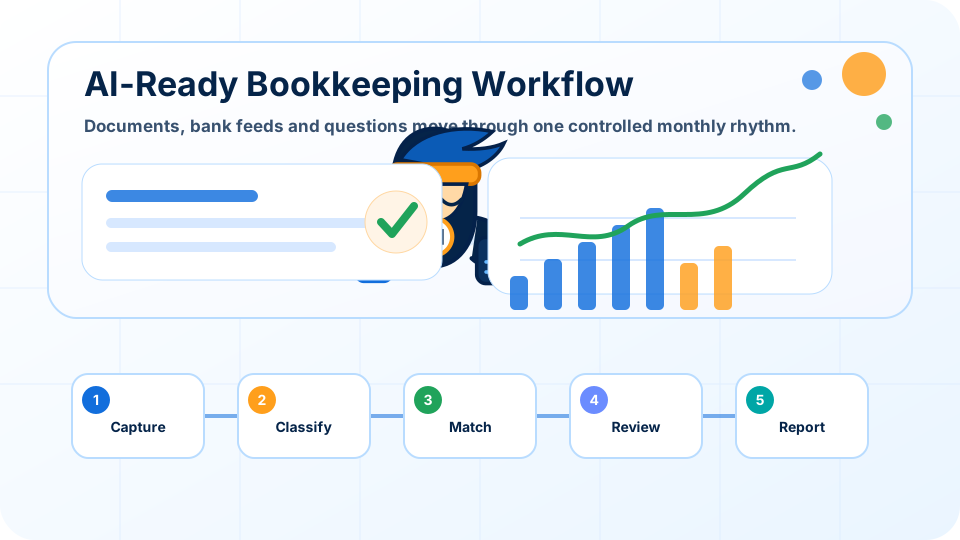
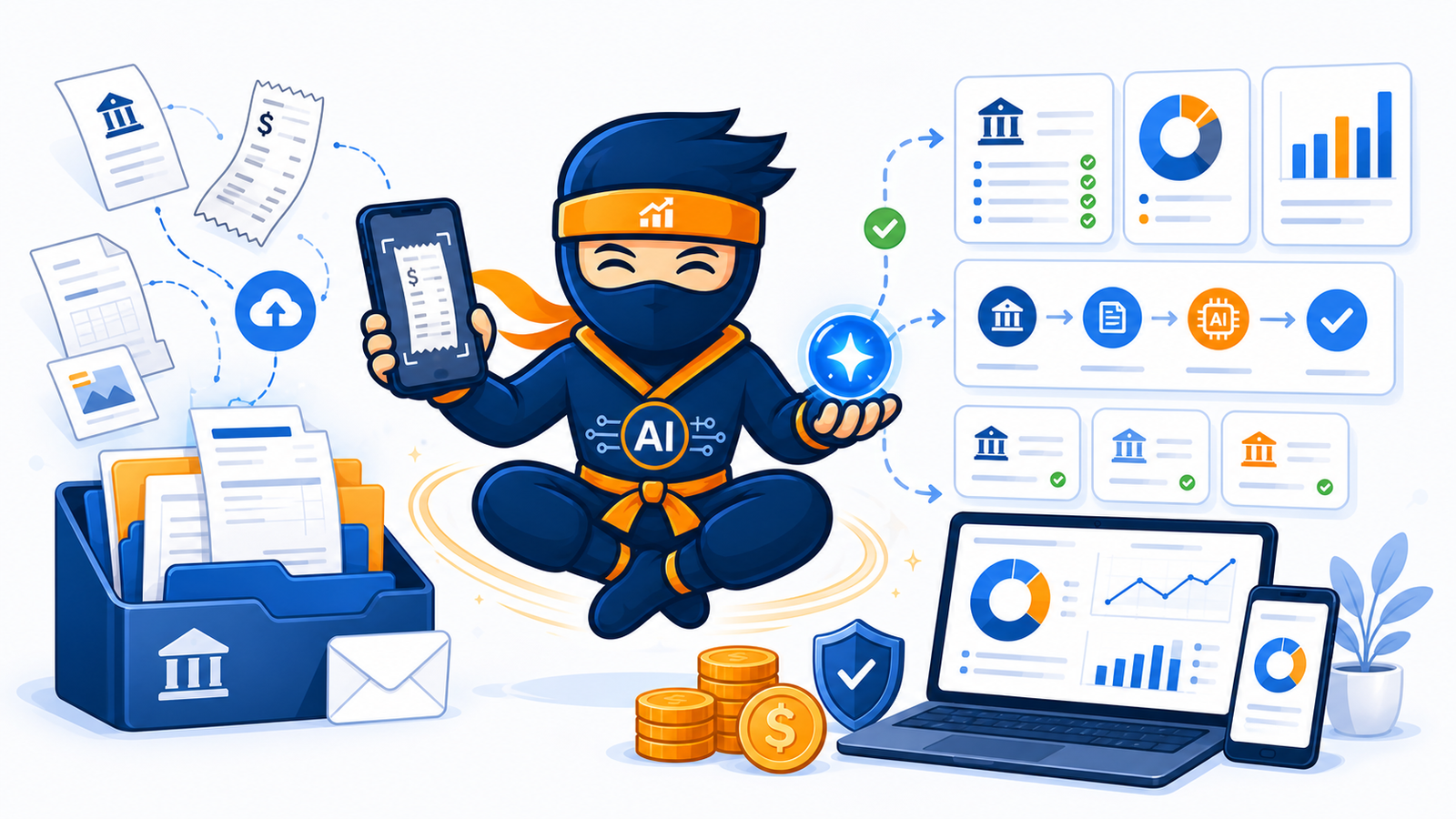
The first contribution of AI is document intelligence. Invoices, receipts, bank slips, payroll files, contracts, tax invoices and reimbursement claims can be uploaded into one workflow. Optical character recognition and language models can read supplier names, dates, totals, tax amounts, currencies, payment terms and invoice numbers. The system can suggest whether a document is a supplier bill, customer invoice, receipt, contract, payroll record or tax document. It can also flag missing fields, duplicate uploads, unreadable scans and documents that do not match the expected format.
This is where many companies immediately feel the difference. Instead of sending scattered files through email, chat threads and personal folders, the business builds an evidence layer. AI can label the file, place it in the right month, suggest the accounting category and attach it to the relevant transaction. The accountant still reviews important items, but the starting point is organized. That reduces rework, shortens month-end closing and makes historical questions easier to answer.
Document control also changes behaviour inside the company. Employees learn that a reimbursement claim needs a receipt, business purpose and approval. A supplier invoice needs a date, amount and vendor identity. A contract should be stored with the revenue or cost it supports. AI can enforce these habits gently by creating missing-evidence lists and sending reminders before the month is already late.
Transaction coding, bank reconciliation and bookkeeping quality
Bookkeeping is one of the most obvious areas for AI assistance. The system can compare bank lines with invoices, receipts and prior transaction patterns. It can suggest account codes, tax codes, tracking categories, customer projects and recurring rules. It can recognize that a monthly software payment usually belongs to subscriptions, that a payroll transfer belongs to employee cost, or that a merchant settlement should be tied to sales and payment fees. This does not mean the machine is always right. It means the accountant begins with a structured suggestion rather than a blank line.
The strongest bookkeeping systems use AI as a review accelerator. Ordinary transactions can move quickly when evidence, amount and pattern all match. Exceptions receive attention: payments with no invoice, duplicate supplier bills, unexplained cash withdrawals, unusual director expenses, old receivables, unexpected refunds, foreign currency differences or transfers that look like income but are actually intercompany movements. The accountant can then focus on the exceptions that create risk.
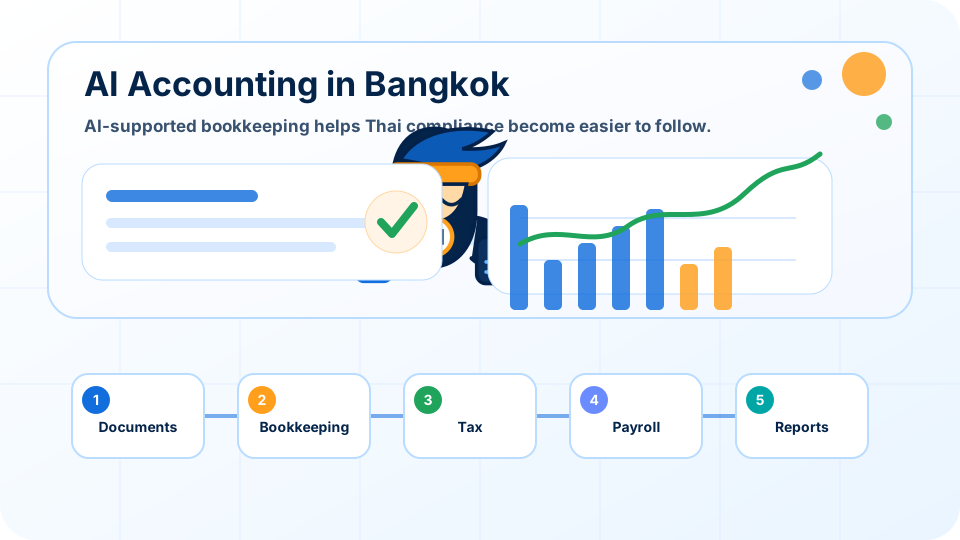
A useful benchmark is the kind of balanced model described by AI-supported accounting in Thailand: automation handles repetitive processing, while experienced accountants stay responsible for compliance, interpretation and advice. That balance is important because accounting is not only pattern recognition. It is also context, local rules and professional accountability.
Tax, VAT, GST and compliance monitoring
AI can contribute to tax work by monitoring transactions continuously instead of waiting until filing season. It can flag tax-sensitive documents, identify missing tax invoices, separate local and foreign revenue, monitor VAT or GST thresholds, prepare lists of withholding tax items, track recurring compliance deadlines and detect transactions that need professional review. For companies operating across Singapore, Thailand or other markets, this early warning function can prevent many last-minute filing problems.
The practical value is not that AI decides the law. Tax rules require interpretation and can change. The value is that AI makes the accounting file more reviewable. If the system can show which invoices may need VAT, which payments may require withholding tax, which documents are missing, which revenue lines are unusual and which deadlines are coming, the accountant has a stronger basis for review. Management also gets more time to approve filings, reserve tax cash and correct evidence before a deadline.
Compliance monitoring can also cover corporate records, payroll submissions, social security or CPF routines, annual accounts, audit schedules and recurring government filings. A company that sees its compliance calendar inside the accounting workflow is less likely to treat obligations as surprises. That is a real quality-of-life change for founders, because many compliance problems are timing problems before they become technical problems.
Accounts payable, receivables and cash-flow control
AI can make accounts payable more controlled by reading supplier bills, checking approval rules, detecting duplicates, comparing payment terms and suggesting payment priorities. It can warn when a supplier invoice is unusual compared with past amounts or when a payment is being prepared without matching evidence. It can also help separate ordinary operating expenses from fixed assets, project costs, subscriptions, reimbursable costs or tax-sensitive payments.
On the receivables side, AI can identify late customers, predict collection risk, match receipts to invoices, propose follow-up lists and summarize which clients are creating working-capital pressure. For service businesses, agencies, SaaS companies and professional firms, this matters because profit and cash often move differently. A company can be profitable on paper and still run into trouble if invoices are collected late or deposits are not tracked correctly.
Cash-flow forecasting becomes stronger when payables and receivables are connected to real accounting evidence. AI can project expected collections, supplier payments, payroll, tax obligations, loan repayments and recurring subscriptions. It can build scenarios: what happens if a large customer pays 30 days late, if payroll rises next month, if VAT becomes payable, or if a new project starts with upfront contractor cost? That kind of visibility changes business life because management can act before cash pressure becomes urgent.
Payroll, reimbursements and employee cost visibility
Payroll is sensitive because it combines money, compliance and employee trust. AI can support payroll by collecting employee changes, reading reimbursement documents, checking missing receipts, separating allowances from ordinary salary, monitoring approval status and comparing the payroll summary with bank payments. It can also help management see employee cost by department, project, location or role, depending on how the accounting file is structured.
The human review remains essential. Payroll may involve local contribution rules, benefits, taxable allowances, director remuneration, bonuses, contractors, leave, termination payments and confidentiality. AI can organize the data and identify inconsistencies, but the accountant or payroll professional should review the treatment. The advantage is that payroll review starts from a cleaner file, with fewer missing documents and fewer unexplained changes.
For businesses, this improves both control and trust. Employees are paid from a clearer process. Management can understand true labour cost. Accountants can reconcile payroll with the ledger, filings and cash movements. A small company may not need a large finance department, but it does need a payroll routine that does not rely on memory and scattered messages.
Fraud detection, anomaly review and internal controls
AI is useful for pattern detection. It can flag duplicate invoices, unusual supplier bank details, split payments, round-number transactions, weekend activity, repeated reimbursements, inactive vendors, payments just below approval limits, unusual refunds, expense categories that suddenly rise or transactions that do not match historical behaviour. These signals do not prove fraud by themselves, but they tell the accountant and management where to look.
Internal controls become more practical when they are embedded in the workflow. Instead of writing a control policy that nobody uses, the company can create AI-supported checks: every supplier bill needs approval, every reimbursement needs evidence, every new vendor needs verification, every large payment needs a second review, every payroll change needs a source document, and every missing receipt appears in an exception list. The system helps people follow the rule because the rule is built into the daily process.
This can change business life in a quiet but powerful way. Owners sleep better when they can see who approved what, which transactions are still open and which exceptions need attention. Accountants can discuss risks with evidence instead of vague concerns. Auditors or reviewers can follow a clearer trail. Controls become less like bureaucracy and more like visibility.
Reporting, dashboards and strategic advisory
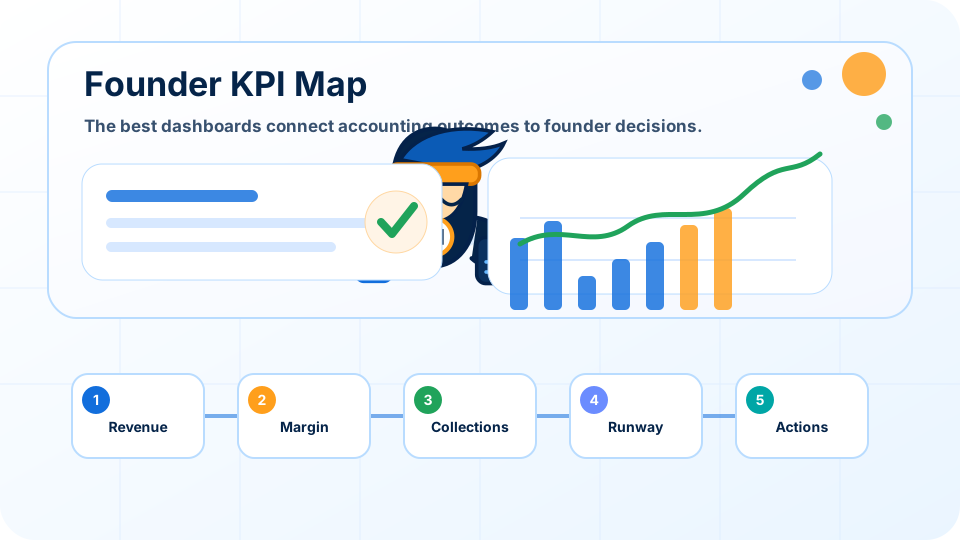
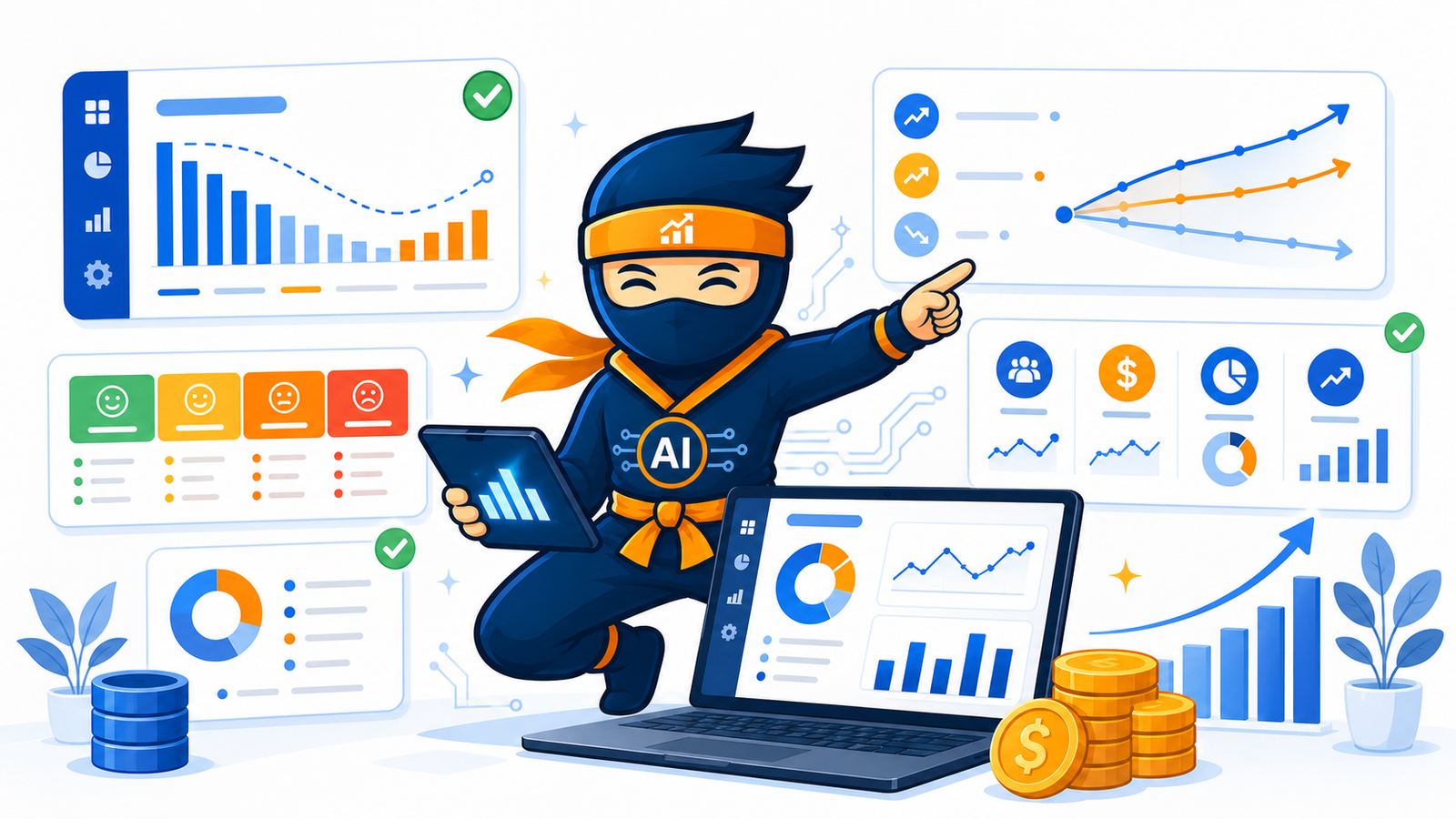
AI can help accounting services produce better management reporting. It can summarize movements in revenue, margin, payroll, software cost, receivables, cash, tax exposure and project profitability. It can compare actuals to budget, explain variances, surface trends and prepare narrative commentary for accountant review. It can also help founders ask questions in plain language: why did gross margin fall, which customers are late, what changed in expenses, how many months of cash remain, or which cost categories are growing fastest?
This is where AI moves accounting from administration to advisory. The accountant can spend more time interpreting reports and less time assembling them manually. A dashboard can show what happened, but the advisory value comes from explaining what it means. Should the company hire, delay spending, chase collections, revise pricing, renegotiate supplier terms, reserve tax cash or review margins? AI can provide signals. The accountant helps translate signals into decisions.
The biggest change for businesses is confidence. Founders no longer have to wait for annual accounts to understand the company. Managers can see finance information during the month, not only after the month closes. Teams can act earlier, measure decisions faster and avoid surprises that were already visible in the data.
Client service, knowledge search and workflow coordination
AI can also improve the service experience between a company and its accountant. A client portal can answer routine questions, show document status, explain what is missing, summarize filing deadlines, route questions to the right person and maintain a searchable history of prior answers. Instead of losing context in email, both sides can work from the same file.
Knowledge search is especially useful for growing companies. The system can help find the contract behind a customer invoice, the receipt behind a reimbursement, the explanation for a journal entry, the approval for a supplier payment or the prior month where a similar question was answered. This reduces the hidden cost of accounting: the time spent asking where things are.
Workflow coordination may sound simple, but it changes daily operations. A business owner can see that bank reconciliation is complete, payroll is pending one approval, VAT evidence is missing for two invoices and the forecast is waiting for sales assumptions. The accountant can see which questions are blocking the close. Everyone spends less time guessing.
What current evidence shows
A 2026 field study summarized by Stanford Graduate School of Business examined survey data from 277 accountants and more than 200,000 transactions across 79 small and medium-sized enterprises. The reported pattern was greater productivity, faster month-end close and a shift from routine entry toward communication and quality assurance, alongside higher error risk when people relied on non-consensus AI recommendations.
The operational lesson is complementarity, not autonomy. AI is most useful when confidence and exceptions determine where the accountant intervenes. Businesses should publish their own before-and-after measures rather than repeating broad claims about transformation without evidence.
Accounting AI tools and platform capabilities
Start with AI capabilities already available in the accounting stack before adding a disconnected product. Current market examples include Xero tools for document capture, reconciliation and forecasting, Intuit Intelligence within the QuickBooks ecosystem, and specialist platforms for accounts payable, close management, expense review or document search. Product capabilities, pricing and data policies change, so confirm them directly with each vendor.
| Capability | Typical accounting task | Required control |
|---|---|---|
| OCR and intelligent document processing | Extract invoice and receipt fields | Verify supplier, tax, currency and duplicate status |
| Machine-learning matching | Suggest bank and ledger reconciliations | Route low-confidence and unusual matches to review |
| Generative AI | Draft explanations, emails and report commentary | Check facts, sources, calculations and client confidentiality |
| Predictive analytics | Forecast cash and collection risk | Disclose assumptions and compare forecasts with actuals |
| AI agents | Coordinate multi-step accounting workflows | Limit permissions, preserve audit trails and require approval gates |
Accounting AI for Singapore startups
Singapore startups can use accounting AI to organize GST evidence, payroll changes, CPF support, corporate-tax schedules and ACRA filing packs. The system may flag missing records or unusual transactions, but current IRAS, CPF and ACRA requirements still need to be interpreted for the company and reviewed by the responsible professional.
Financial and employee data should also be assessed under the company's privacy and vendor-governance obligations. A practical design limits access by role, separates preparation from approval and keeps source evidence attached to every material conclusion.
Accounting AI risks and limitations
Hallucinations and false confidence
Generative systems can produce plausible but incorrect rules, calculations or citations. Current law and accounting treatment should be checked against authoritative sources and professional judgement.
Data privacy and unauthorized use
Financial, payroll and identity data should remain within approved environments with access controls, retention rules, encryption and a clear vendor policy on model training and subprocessors.
Poor data and unexplained outputs
A model trained on inconsistent categories or incomplete evidence can automate the wrong habit. Confidence scores, source links, change logs and audit trails help reviewers understand what happened.
Vendor and integration risk
Assess exportability, bank and ledger permissions, segregation of duties, outage handling and vendor lock-in before an AI tool becomes part of the close process.
How to implement accounting AI safely
1. Audit the workflow
Map repetitive work, error points, sensitive data and professional judgement. Record the baseline time, exception rate and correction volume before selecting a tool.
2. Select a controlled pilot
Choose a narrow workflow such as document intake, bank-match suggestions or internal document search. Define approved data, permissions, confidence thresholds and mandatory escalation rules.
3. Keep a human in the loop
Require an accountable reviewer for client communication, ledger changes, tax treatment, payroll, filings and material reports. Record overrides so the system and process can be improved.
4. Measure before scaling
Compare time saved with accuracy, exception volume, post-close corrections and user adoption. Expand only when controls and reporting quality remain reliable.
Accounting AI implementation checklist
- Capture invoices, receipts, contracts, payroll files and bank documents through one structured intake workflow.
- Read document fields automatically: supplier, customer, date, tax amount, currency, invoice number and payment terms.
- Detect missing evidence, duplicate invoices, unreadable scans and documents that do not match expected patterns.
- Suggest bookkeeping categories, tax codes, tracking dimensions and bank reconciliation matches for accountant review.
- Monitor VAT, GST, withholding tax, payroll, social security, CPF or other recurring compliance deadlines where relevant.
- Prepare payable approval queues, supplier payment priorities and duplicate-payment warnings.
- Track receivables, late customers, collection risk, refunds, deposits and cash-flow pressure.
- Forecast cash using expected collections, payroll, tax, subscriptions, supplier bills and scenario assumptions.
- Support payroll review with employee changes, reimbursements, approvals, salary summaries and payment reconciliation.
- Flag anomalies such as unusual vendors, round-number payments, repeated claims, split payments and sudden category changes.
- Create management dashboards for revenue, margin, payroll, cash, receivables, tax exposure and project profitability.
- Generate variance explanations and plain-language report commentary for professional review.
- Search accounting evidence, contracts, approvals and prior explanations from one secure knowledge base.
- Route client questions, missing-document reminders and month-end blockers to the right person.
- Protect accountability by keeping accountants responsible for judgement, compliance review and final advice.
How AI can change life for businesses
The business impact is not simply that accounting becomes faster. It becomes calmer. Owners see missing documents earlier. Managers understand cash pressure sooner. Accountants review exceptions instead of rebuilding the file from scattered messages. Payroll, tax and reporting become visible routines rather than recurring emergencies.
AI also changes the relationship between the accountant and the business. The accountant becomes less of a historical processor and more of a reviewer, controller and advisor. The company gets better habits: cleaner evidence, faster close, earlier warnings, stronger controls and more useful financial conversations. Used well, AI gives businesses time back, reduces uncertainty and turns accounting into a decision system.
Additional review considerations
The best implementation starts small. A company does not need to automate every accounting task at once. It can begin with document intake, bank reconciliation suggestions, missing-evidence lists and a monthly dashboard. Once those habits are stable, it can add forecasting, anomaly review, tax monitoring and more advanced advisory reporting.
Data quality and security must be treated as part of the project. AI tools should not receive unrestricted access to sensitive payroll, bank or tax records without permission controls, vendor review and retention rules. The more useful the accounting system becomes, the more carefully the company should manage who can see, change and export its data.
Related Ninja Accountant guides
Frequently Asked Questions
What accounting tasks can AI automate?
AI can assist with document extraction, transaction coding, bank matching, payable and receivable workflows, anomaly detection, forecasting, reporting drafts and internal knowledge search. Review requirements vary by task and risk.
How accurate is accounting AI?
Accuracy is highest on stable, pattern-based work with complete evidence. It falls on unusual, ambiguous or jurisdiction-specific items, so confidence thresholds and professional review are essential.
Is it safe to upload financial data to an AI tool?
Only after reviewing the vendor's security, retention, model-training, access-control, subprocessor and data-location policies. Consumer tools should not receive confidential client or payroll data without explicit approval.
Will accounting AI replace accountants?
It will automate parts of accounting work, but judgement, accountability, interpretation, client advice and legal sign-off remain human responsibilities. The likely model is AI-assisted work with professional oversight.
What is the best accounting AI tool for a small business?
The best fit depends on the existing ledger, volume, workflow problem, integration requirements, data policy and available human review. Begin with a defined use case rather than buying a tool because it is labeled AI.