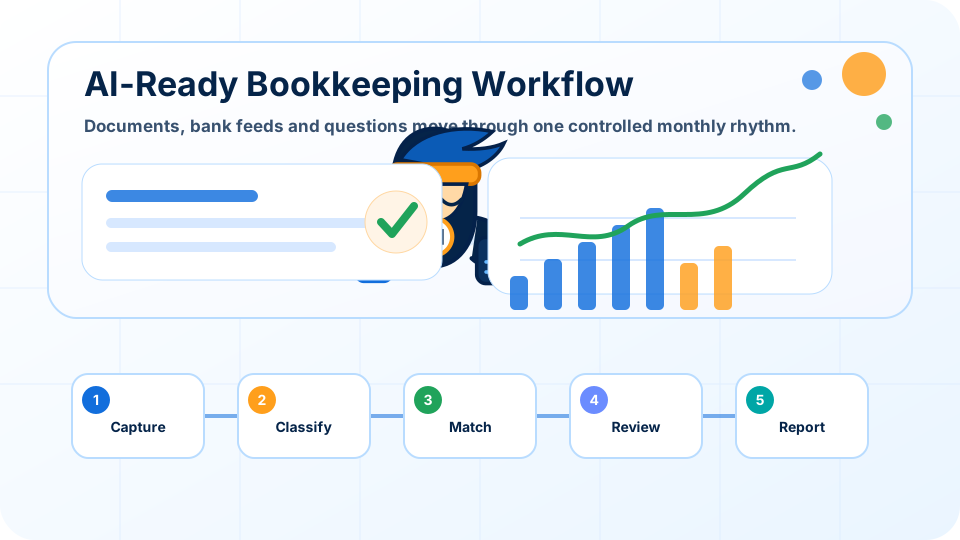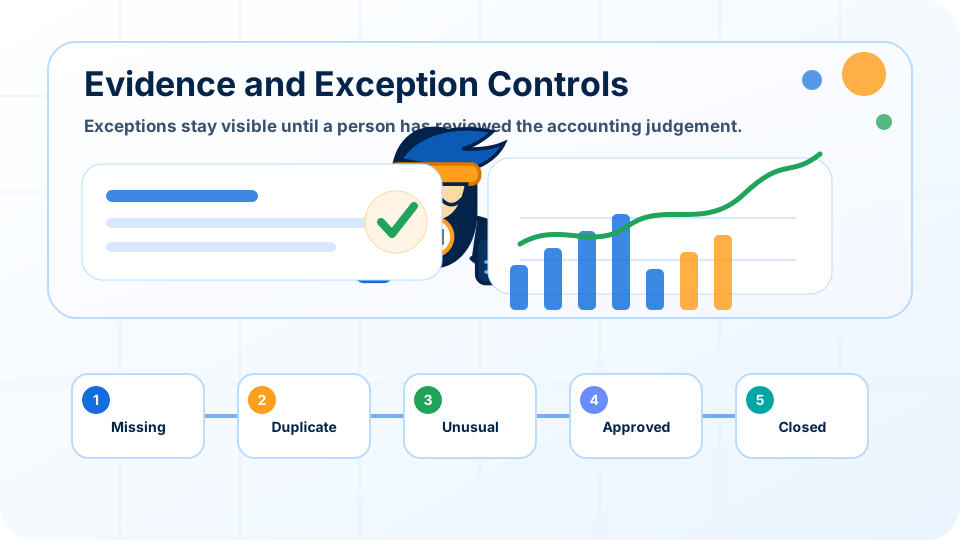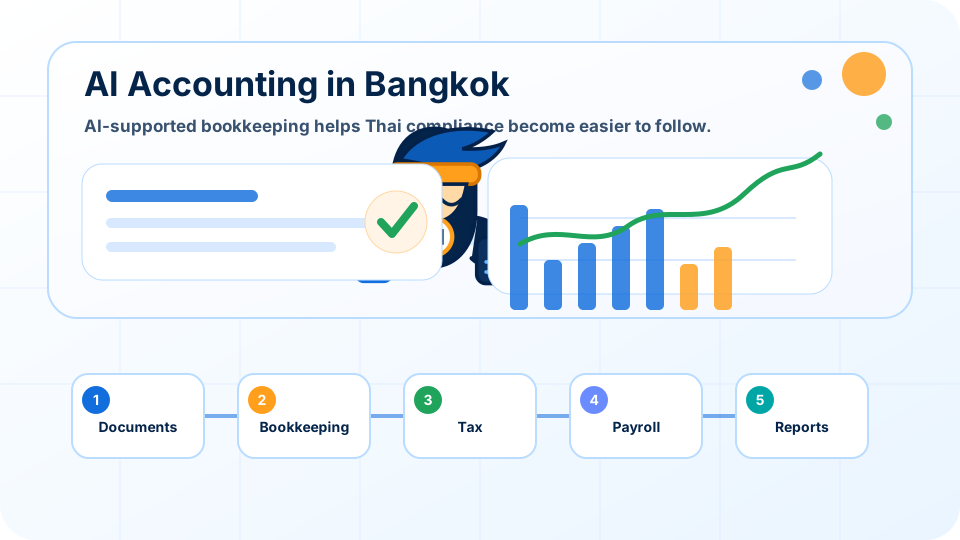
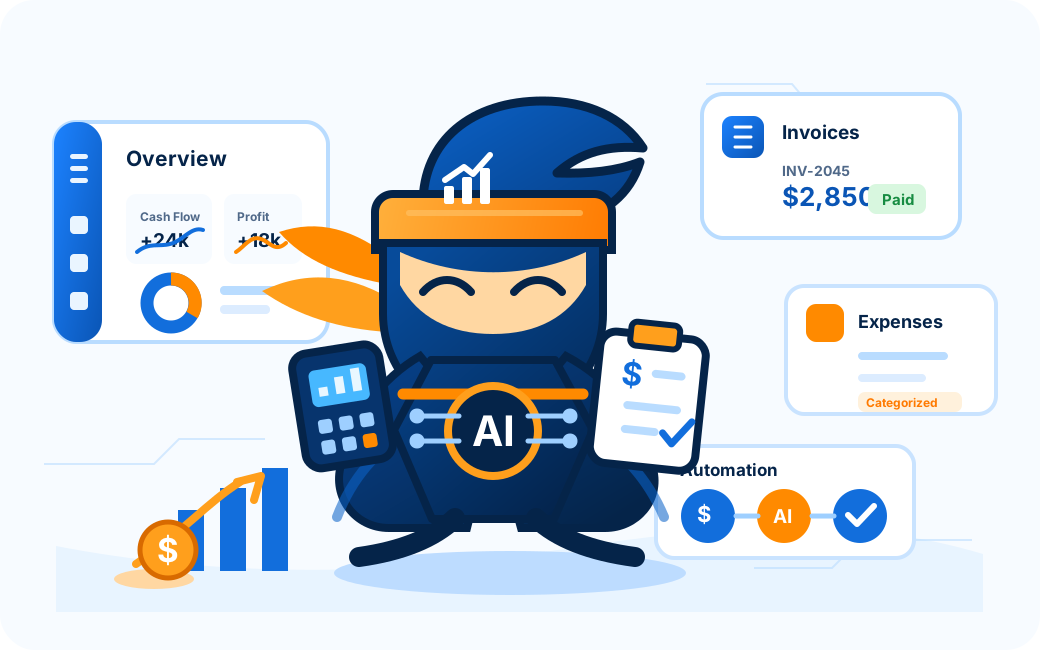

AI bookkeeping uses automation to capture documents, suggest transaction matches and surface exceptions while an accountant remains responsible for judgement, compliance and final review.
Key takeaways
- Automation works only after invoices, receipts, bank data and approvals enter one consistent evidence workflow.
- High-confidence matches can accelerate bookkeeping, but unusual, material and tax-sensitive transactions still require professional review.
- The most useful success measures are close time, missing-document volume, reconciliation exceptions and the reliability of founder reports.
- Singapore GST, payroll, CPF and corporate-tax treatments should never be inferred from a generic AI answer alone.
What is AI bookkeeping?
AI bookkeeping is the use of optical character recognition, matching models and workflow automation to help convert source documents and bank activity into review-ready accounting records. The technology can read invoice fields, suggest categories, find likely bank matches and identify missing evidence. It does not remove the need to decide whether the accounting treatment is correct.
For a Singapore startup, the practical goal is not fully autonomous books. It is a controlled monthly workflow in which routine evidence is organized quickly, exceptions are visible and an accountant can review GST, payroll, fixed assets, director transactions and cut-off questions before reports are trusted.
Why ordinary bookkeeping breaks as soon as the company grows
Most early-stage companies begin with a practical habit: the founder forwards invoices, downloads a few bank statements, asks an employee to keep receipts, and expects the accountant to make sense of everything at month-end. That works for a very small number of transactions, but it becomes fragile when the business adds subscriptions, payroll, reimbursements, director expenses, project deposits, GST considerations or multiple bank accounts. The problem is not only volume. The problem is that context disappears. A bank line tells the accountant that money moved, but it does not explain what was bought, who approved it, whether GST should be considered, or whether the cost belongs to a customer project, payroll, software, marketing or fixed assets.
An AI-ready workflow starts earlier. It treats documents as evidence, not attachments. Every invoice, receipt, bank export and clarification is captured with enough context for classification, matching and review. The technology can suggest categories, find duplicate documents and connect bank movements to invoices, but a professional still checks material items, unusual transactions and compliance-sensitive areas. The result is a month-end process that feels calmer because the accounting file has been built continuously rather than rescued after the fact.
The source-document layer is the real foundation
The first design decision is simple: do not let source evidence live across email threads, chat screenshots and personal folders. A founder-ready system needs a single intake route for supplier invoices, sales invoices, receipts, reimbursements, payroll records, contracts, bank statements and adjustment notes. The goal is not to create bureaucracy. The goal is to make the next accounting action obvious. A receipt should show who paid, why it was incurred, whether it is reimbursable, and which customer, department or project it supports. A supplier invoice should show approval status, due date, payment status and the correct accounting treatment.
AI becomes useful when the evidence layer is consistent. Optical recognition can read supplier names, dates and totals. Matching routines can compare an invoice with the bank feed. Classification models can suggest expense categories. But these tools become unreliable when the upload habit is incomplete. A missing receipt is still missing, a personal card payment still needs business purpose, and a supplier credit note still needs human interpretation. The professional advantage is designing the intake checklist so that automation receives structured, reviewable material.
Bank reconciliation should become a review workflow
In a mature process, bank reconciliation is not a clerical hunt for documents. It is a review workflow. The bank feed provides the movement. The document layer provides the commercial reason. The accountant confirms whether the match is correct, whether the classification is consistent, whether the timing is appropriate, and whether there are exceptions. Exceptions matter because they reveal operational risks: customer payments with no invoice, supplier payments without approval, payroll transfers without supporting records, owner drawings mixed with business costs, or recurring subscriptions that no one monitors.
A Singapore startup can make this practical by maintaining a monthly evidence cutoff. By the third working day, bank statements and exports should be available. By the fifth working day, missing receipts and explanations should be requested. By the seventh working day, high-risk items should be reviewed. By the tenth working day, the founder should receive a dashboard that distinguishes completed books from open questions. The exact dates can change, but the rhythm should not be improvised every month.
Founder questions should shape the coding structure
A useful accounting system is not only built for filing. It should answer founder questions: which channels are producing margin, which software subscriptions are growing, which customers are slow to pay, which projects are absorbing contractor cost, and how many months of cash runway remain. Those questions influence the chart of accounts, tracking categories, document tags and reporting cadence. If the founder needs project visibility, the workflow must capture project context at intake. If the founder needs customer profitability, sales and direct costs must be mapped consistently. If the founder needs cash discipline, payables and receivables aging must be reviewed before month-end reports are sent.
This is where AI-supported bookkeeping becomes strategic. Automation can accelerate capture and matching, but the accountant designs the structure that makes the data useful. A clean workflow connects evidence, coding, review and reporting. Without that structure, dashboards become decorative. With that structure, the founder can see what changed, why it changed, and what needs attention before cash or compliance becomes urgent.
Where AI bookkeeping needs human review
Tax and classification judgement
A familiar-looking payment can still be a fixed asset, director loan, deposit, prepayment or non-deductible expense. Pattern matching cannot determine treatment without business context.
Confidential financial data
Payroll files, bank statements and identity documents should be processed only in approved systems with role-based access, retention rules and a clear understanding of whether vendor systems use customer data for model training.
Weak or incomplete evidence
Automation cannot repair a missing contract, an unreadable receipt or a bank transfer with no commercial explanation. Those items should remain exceptions rather than being coded confidently.
How to implement AI bookkeeping safely
1. Baseline the present close
Record how long reconciliation takes, how many documents arrive late and which transaction types repeatedly need clarification. These figures create a baseline for deciding whether automation produces a real improvement.
2. Pilot one controlled workflow
Begin with document intake or bank-match suggestions rather than automating every ledger decision. Define which items can proceed normally and which amounts, suppliers or account types must always be escalated.
3. Add review and measurement
Assign a named reviewer, record overrides and measure close time, unresolved items and recurring errors for at least two monthly cycles before expanding the workflow.
Monthly AI bookkeeping control checklist
- Use one intake channel for invoices, receipts, bank exports, contracts, payroll records and founder explanations.
- Tag documents by supplier, customer, project, approver and payment status before reconciliation begins.
- Keep a monthly missing-evidence list so exceptions are visible instead of hidden in email threads.
- Separate personal reimbursements, director expenses and corporate card spend from ordinary supplier invoices.
- Review recurring software, bank charges, loan payments and merchant fees with consistent coding rules.
- Give the founder a close-status dashboard that shows complete, pending and high-risk items.
- Document the accountant's review points for GST, payroll, fixed assets, accruals and unusual transactions.
- Archive final reports with the evidence pack so future questions can be answered quickly.
How Ninja Accountant reviews this area
Ninja Accountant's review layer should focus on the judgement points that automation cannot own: materiality, classification consistency, compliance sensitivity and business context. The accountant should not simply accept every suggested match. They should understand why the item exists, whether the document supports it, and whether the treatment will still make sense when tax, GST, payroll or year-end reporting is prepared.
A strong workflow also creates coaching moments. When founders see repeated missing receipts, late uploads or uncoded customer deposits, they can improve the operating habit. The best accounting process is not invisible. It teaches the company how to produce cleaner information every month.
Additional review considerations
The deeper benefit is auditability. Even when a startup is not under audit, it should be able to explain how a number was produced. A well-maintained evidence trail reduces time spent answering old questions, helps new finance team members understand past decisions, and gives the accountant confidence when preparing annual accounts or tax schedules.
Security is part of the workflow design. Access to payroll records, bank documents and director reimbursements should be controlled. A founder can still move quickly while limiting who can upload, approve, edit or export sensitive documents. That discipline matters as soon as the company hires staff or adds outside investors.
Related Ninja Accountant guides
Frequently Asked Questions
Can AI do bookkeeping without an accountant?
AI can automate capture, matching and first-pass classification, but it should not own unusual transactions, tax treatment, material adjustments or final sign-off. A professional remains accountable for the books.
Which bookkeeping task should a startup automate first?
Document intake and bank reconciliation suggestions are usually the safest starting points because the inputs and review outcomes are visible. Start with one workflow and measure it before expanding.
How accurate is AI transaction categorization?
Accuracy depends on the quality of the evidence, the stability of transaction patterns and the review rules. Treat confidence scores as routing signals, not proof that the classification is correct.
What should founders measure?
Track close time, missing-document count, unreconciled items, accountant overrides and the number of post-close corrections. Time saved is useful only when reporting quality remains strong.