
Thai tax filing for foreigners begins with tax residency, income sources and supporting evidence; an AI portal can organize the file but cannot determine legal treatment without professional review.
Key takeaways
- Build a day-count and travel record before assuming Thai tax residency or non-residency.
- Map income by source, payer, currency, payment date and destination account, then retain the underlying contracts and statements.
- Use an AI portal for intake, reminders and exception lists—not as an unsupervised source of Thai tax law.
- Confirm current forms, deadlines, rates and foreign-income treatment with the Thailand Revenue Department or a qualified Thai tax adviser.
What Thai tax filing for foreigners involves
Thai personal income-tax preparation for a foreigner can involve residency days, Thai and foreign income, employment or business facts, withholding certificates, deductions, allowances, prior payments and supporting documents. The correct treatment depends on the tax year and individual circumstances.
A portal can collect information and flag missing evidence, but it should cite current official guidance and route ambiguous residency, remittance, treaty, deduction or classification questions to a qualified reviewer. This guide is general information, not individual tax advice.
Why Thai tax filing feels confusing for many foreigners
Thailand is a practical base for entrepreneurs, remote professionals, employees, consultants, retirees and investors, but the tax side is often less intuitive than the lifestyle side. A foreigner may have Thai salary, overseas income, company dividends, director fees, rental income, consulting payments, capital movements, allowances, deductions, social security, withholding tax certificates and bank records spread across several countries. The difficulty is not only understanding whether tax is due. The difficulty is collecting the evidence in a way that a professional can review and file without guessing.
Foreigners also tend to arrive with mixed advice from friends, social media groups and old forum posts. Some advice may be incomplete, outdated or true only for a different fact pattern. Thai personal income tax questions should be approached as a document project first. Before anyone can give useful guidance, the taxpayer needs a profile, calendar, income map, document list and filing objective. That is where a structured digital workflow can help.
Start with tax residency and the income map
The first practical question is whether the person should be treated as a Thai tax resident for the relevant year and what income categories need review. Time spent in Thailand, Thai-source income, employment arrangements, business activity, remittances, withholding tax and treaty considerations can all matter. A clean filing file starts with the facts: nationality, immigration status, days in Thailand, employer details, work permit situation if relevant, Thai bank activity, overseas income sources and any tax already withheld.
The income map should be simple enough to maintain. List salary, bonus, consulting fees, director fees, freelance work, rental income, dividends, interest, capital gains where relevant, pension income and other payments that may need review. Then attach evidence to each category. A tax professional can interpret the rules, but they need source documents and context. Without that map, the review becomes reactive and the taxpayer may miss useful deductions or important risk points.
Documents are the difference between a calm filing and a stressful filing
Most personal tax problems are document problems. A taxpayer may know roughly what they earned, but the filing process needs support: employer certificates, withholding tax certificates, payslips, invoices, bank statements, receipts, pension documents, insurance documents, spouse or dependent information where relevant, donation receipts and proof of tax paid. If the documents arrive as screenshots, forwarded messages and partial files, the professional review becomes slower and more expensive.
A better habit is to collect documents by category and year. Keep originals, scans and translations where needed. Name files clearly. Separate Thai-source income from overseas income. Keep a note explaining unusual payments. If income was already taxed elsewhere, keep the foreign tax evidence. If a deduction is claimed, keep the receipt and eligibility support. This does not make the tax law simple, but it makes the review possible.
Where an AI-powered tax portal can help
A portal is useful when it turns a vague tax problem into a visible workflow. The partner service TaxEase Thai presents itself as an AI-powered portal designed to simplify Thai tax obligations for foreigners. Its public positioning focuses on document processing, tax estimation and professional filing preparation. That combination is valuable because many taxpayers need a bridge between raw documents and a professionally reviewable filing file.
The benefit is not that AI replaces tax judgement. Personal income tax still requires professional interpretation. The benefit is that AI-supported intake can help organize files, prompt the taxpayer for missing documents, summarize the profile, estimate possible obligations and prepare the case for review. For a foreigner who is not familiar with Thai filing routines, that visibility can reduce anxiety and prevent the common last-minute scramble before deadlines.
What a good Thai tax portal should make visible
A useful tax portal should show the taxpayer what stage the case is in: profile started, documents requested, documents uploaded, missing evidence identified, income categories reviewed, estimate prepared, professional review pending, filing preparation in progress and confirmation completed. It should separate documents by type and year. It should avoid hiding important questions behind a generic upload box. The taxpayer should know what is missing and why it matters.
Security and privacy also matter. Tax files contain passport details, income records, bank information, family details, addresses and business records. A modern workflow should treat those files as sensitive. The taxpayer should avoid sending everything through scattered chat threads if a structured portal is available. A good system reduces both administrative friction and data confusion.
How foreigners should prepare before starting
Before opening a case, prepare a one-page tax profile. Include your full name, nationality, Thai address, current visa or work permit status, days in Thailand during the tax year, employer or business details, Thai tax ID if available, main income sources and whether any tax was withheld. Then prepare a folder for the tax year with income evidence, deduction evidence and bank records. If you have overseas income or paid tax in another country, keep those documents separate so the professional can review them carefully.
Do not wait until everything is perfect. A portal can help reveal missing evidence, but it cannot recover documents that were never requested. Starting early gives the taxpayer time to ask employers, banks, accountants or overseas institutions for the right certificates. It also gives the professional time to raise questions before the filing window becomes urgent.
Common mistakes to avoid
The first mistake is assuming that tax filing is unnecessary because someone else said so. Thai tax treatment depends on facts and year-specific details. The second mistake is confusing visa status with tax status. Immigration and tax are connected in real life, but they are not the same analysis. The third mistake is relying on bank balances instead of income documents. Bank statements help, but they do not explain the legal nature of each payment.
Another mistake is treating deductions as automatic. A deduction or allowance usually needs eligibility and evidence. Foreigners should also avoid submitting incomplete information and then expecting the professional to infer the rest. Good tax support works best when the taxpayer is transparent. If a payment is unclear, explain it. If a document is missing, say so. If income was earned overseas, flag it for review rather than hiding it inside a general folder.
Risks when using an AI tax portal
Stale or invented tax rules
The portal should link to current official sources and clearly identify assumptions. Do not rely on a confident answer without checking the applicable tax year and facts.
Sensitive identity and financial data
Review encryption, access, retention, model-training and data-location policies before uploading passports, tax IDs, payslips or bank statements.
False completeness
A completed questionnaire does not prove that all income, treaty, residency or deduction issues were identified. Require a professional escalation route for ambiguous items.
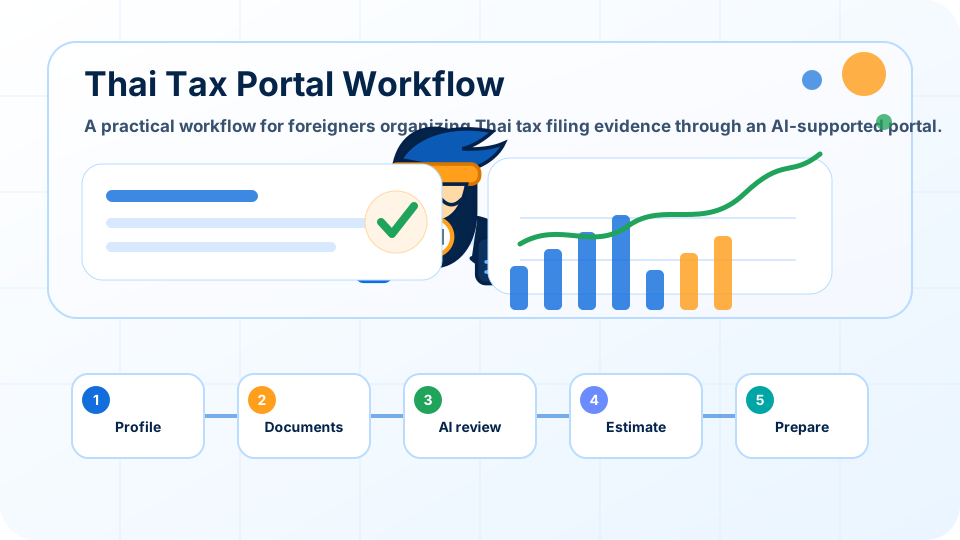
Thai personal tax preparation workflow
1. Establish the personal timeline
Record passport details, entry and exit dates, address, visa or work status, employers, businesses and relevant family facts for the tax year.
2. Build the income and evidence map
List each income source with payer, country, currency, date, withholding and bank evidence. Keep contracts, payslips, certificates and deductible-expense records.
3. Review before filing
Resolve missing documents and judgemental items, reconcile withholding and payments, confirm the current official form and deadline, then retain the submitted return and receipt.
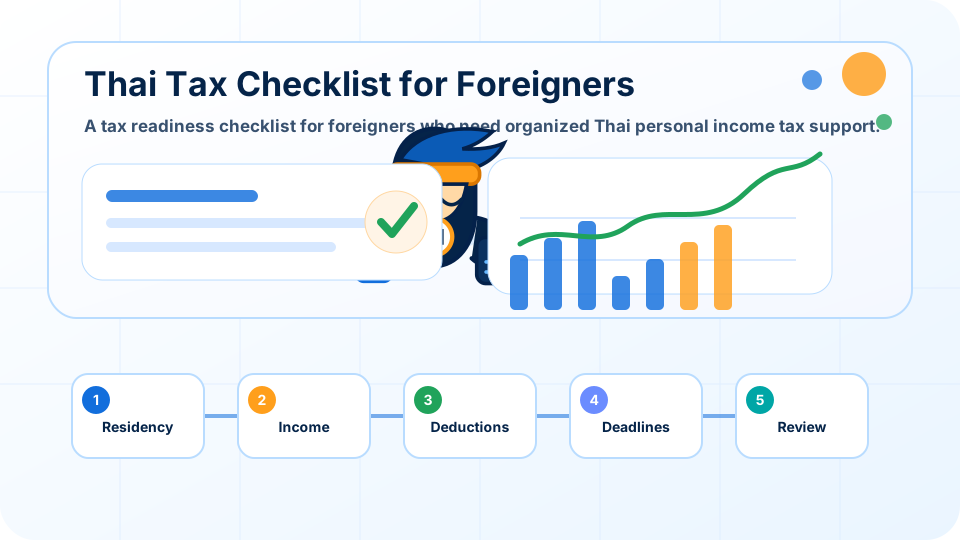
Thai tax filing preparation checklist
- Create a tax-year profile with nationality, Thailand days, visa or work permit status, Thai tax ID and contact details.
- List all income categories before uploading documents: salary, consulting fees, director fees, rental income, dividends, interest and overseas income.
- Collect employer certificates, withholding tax certificates, payslips, invoices, receipts, bank statements and deduction evidence.
- Separate Thai-source income from overseas income and keep foreign tax documents in a dedicated folder.
- Start early enough to request missing documents from employers, banks, accountants or overseas institutions.
- Use a structured portal when possible so missing evidence and review status remain visible.
- Ask for professional review before filing if residency, remittances, treaty issues or mixed income sources are involved.
- Keep a final archive of the filed return, payment confirmation and supporting evidence for future reference.
A practical partner portal to consider
For foreigners who want a more organized way to approach Thai personal income tax, TaxEase Thai is worth considering. The service is positioned as an AI-powered portal for foreigners that helps with document processing, tax estimation and professional filing preparation. That makes it especially relevant for expats, entrepreneurs and long-stay residents who need a clearer workflow before speaking with a tax professional.
The right approach is still disciplined: prepare your facts, upload the documents, answer follow-up questions honestly and treat the estimate as part of a review process rather than a shortcut around professional judgement. Used that way, a portal can make Thai tax filing feel less opaque and much easier to manage.
Additional review considerations
Foreigners with company ownership, board roles, overseas consulting, property income or cross-border employment should be especially careful. A simple checklist may not be enough when income has multiple legal sources. In those cases, the portal should be used to organize the case and the final position should be checked professionally.
Tax filing is also a reputation and compliance issue. Clean filings, organized evidence and clear confirmations make future visa, banking, accounting or business discussions easier. The best tax workflow is the one you can explain again later.
Related Ninja Accountant guides
Frequently Asked Questions
Does every foreigner in Thailand need to file a tax return?
Not necessarily. Filing depends on residency, income, thresholds, withholding and other facts for the relevant year. Confirm the current position with the Revenue Department or a qualified adviser.
Can an AI portal determine Thai tax residency?
It can calculate travel days and collect facts, but complex day counts, treaty questions and personal circumstances may require professional review.
Which documents should a foreign taxpayer retain?
Common records include passport and travel history, tax ID, payslips, withholding certificates, contracts, bank statements, income schedules, deduction evidence, prior returns and filing receipts.
Is Thailand Revenue Department e-Filing the same as a private tax portal?
No. A private portal may organize or prepare information, while the official Revenue Department system is the government filing channel. Confirm how data moves between them.